
Your ride, matched on approach.
Pickup is where the ride breaks down: a row of similar cars, a PIN read out to a stranger, a rank of identical robotaxis with no one to ask. Parousya moves identification to the approach, so the right vehicle announces itself to your phone and the match is confirmed through a central server while the driver never learns who you are.
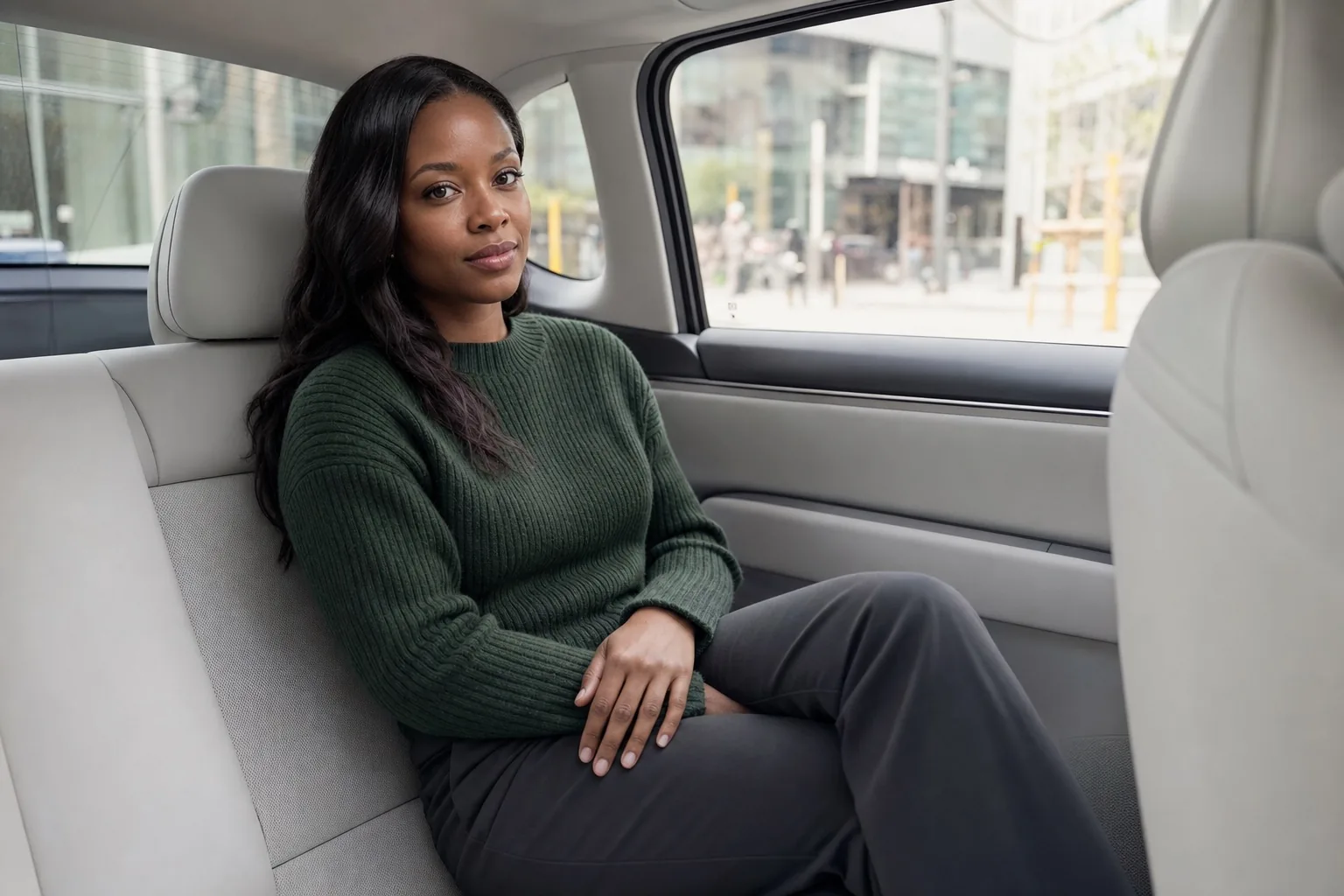
Which car is mine
At a busy pickup zone a line of near identical cars all claim to be the booking. Matching a plate to the app while traffic pushes forward is the friction a rider feels on every trip.
The PIN handoff
Reading a code out to a stranger, or waiting while they read it back, is slow and easy to get wrong. It also puts a fragment of the rider's identity in the driver's hands for no lasting benefit.
A queue of identical robotaxis
A driverless fleet is a rank of matching cars with no one to ask. Which one was dispatched for this rider is left to a screen, and a wrong door wastes the whole pickup.
Matched as you approach
The vehicle broadcasts a short range signal over a transport such as Bluetooth Low Energy. The rider's phone detects it, confirms the booking, and points to the right car. No plate hunting, no code to read out.
Any robotaxi knows the rider
With no driver in the loop the same pairing still resolves. The car recognises the rider's phone on approach, so the door they walk to is already the assigned one and the trip is already theirs.
Real time visibility, held by the server
The pairing is registered with a central server under parent patent US10657515B2, so a corporate travel desk, a family member or carer, or the fleet operator can each be granted the view they are entitled to. Third party querying, a capability of divisional patent US11392923B2, is what lets an authorised party follow a trip in progress.
Anonymous to the driver, nothing sent early
The two devices never connect directly under US10657515B2, and nothing moves until the rider acts. Presence enables the match without turning into surveillance, and the driver never receives an identity.
Common questions
- How does my phone know which car is mine?
- The car broadcasts a short range wireless signal and your phone detects the nearest match, then confirms it against your booking through the server. The right vehicle identifies itself, so you stop reading plates.
- What replaces the PIN with a driver?
- The match is made between the car and your phone through the central server described in parent patent US10657515B2. There is no code to say out loud, and the driver never receives your identity.
- How does a robotaxi recognise me with no driver?
- The same pairing works without a person in the loop. The car detects your phone on approach and the trip is already assigned to you, so a rank of identical cars stops being a guessing game.
- Can my company or family follow the trip?
- Yes, where you allow it. Third party querying, a capability of divisional patent US11392923B2, lets an authorised party such as a travel desk or a family member see the trip in real time while you stay anonymous to the driver.
- Is my location being broadcast the whole time?
- No. The two devices never connect directly and nothing is sent until you choose to act, so presence is used for the match rather than continuous tracking.
- Proximity identification, explainedHow presence becomes a match.
- Proximity payment vs tap to payDetection against a deliberate tap.
- Proximity identificationFinding the nearest vehicle.
- Third party queryingHow a travel desk or family follows the trip.
- How does a robotaxi know it is you?The driverless pickup case.