
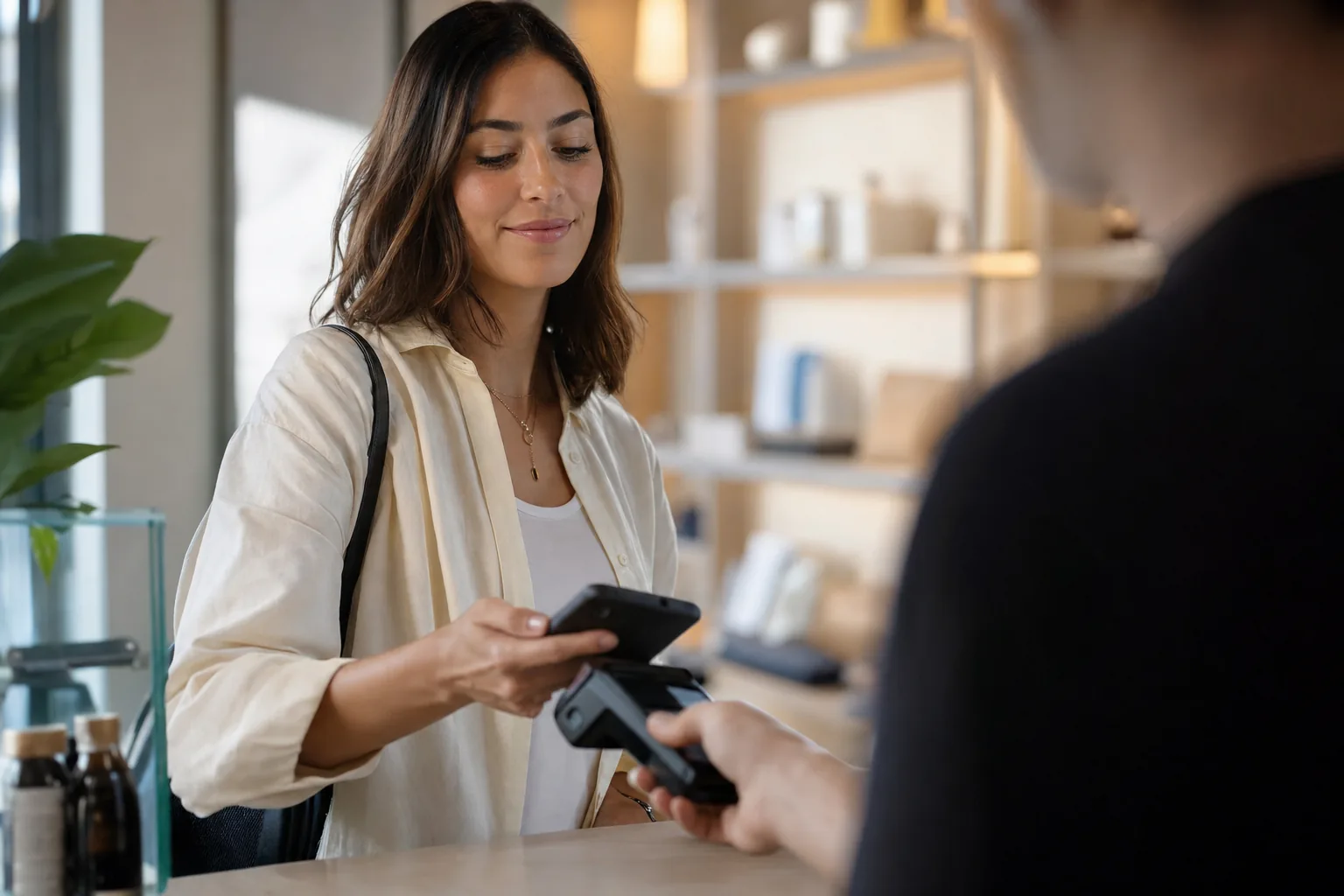
The short answer
Yes. A contactless tap is one of the safer ways to pay. It runs on the EMV contactless standard over NFC, and it uses tokenization, which means the terminal receives a device specific token and a one time code instead of your real card number. Even if that data were captured, it would not reveal the card underneath.
Three things that protect a tap
Contactless safety is not one feature. It is three properties working together.
- Very short rangeNFC works over a few centimetres, so a payment needs a deliberate hold against the reader. The range is set by the NFC Forum.
- TokenizationYour real card number is replaced by a token tied to your device. The merchant and terminal never handle the actual number. Payment tokenization is standardized by EMVCo.
- A one time codeEach tap generates a fresh cryptogram, so a captured transaction cannot be replayed as another payment.
What a tap does not cover
The protections are real, and they are also specific. Tokenization guards the card number in transit. It does not hide that you were present at the counter, and it does not remove the physical step. You still have to take the device out and present it to the reader.
That is the honest boundary. Tap to pay makes the card data safe to move. It does not change the fact that paying is still something you perform at the terminal.
Privacy by design, one step further
A different approach starts from the data itself. In the proximity method patented by Parousya Technologies, the phone and the provider never connect to each other directly. They pair only through a central server, and nothing is sent until you choose to act. There is no open channel between the two devices for a nearby radio to exploit, and no information leaves your phone before you approve.
Identity is anchored by an install reference. When the app is installed it registers with the server, so a later pairing matches two known parties rather than trusting an anonymous signal. The parent patent US10657515B2 covers the server routed payment, and the divisional US11392923B2 adds capabilities such as identifying a person without a payment.
Tokenization and server routing solve different problems
The two ideas are complementary. One protects the number. The other removes the direct link between devices.
| Concern | Tokenization, the tap | Server routed proximity |
|---|---|---|
| Your real card number | Hidden behind a token | Never presented to a reader at all |
| A replayed transaction | Blocked by a one time code | The server holds and confirms each match |
| A direct device link to attack | Still a tap between two devices | The two devices never connect directly |
| Data leaving before you agree | The tap sends on contact | Nothing is sent until you act |
Common questions
- Is tap to pay safe?
- Yes. It uses tokenization and a one time code over a very short range, so the terminal never sees your real card number and a captured tap cannot be replayed.
- Can someone steal my card by bumping a reader into me?
- It is very hard. The range is only a few centimetres, the number is tokenized, and each tap needs a fresh one time code, so a stray read is not a usable payment.
- Does the store see my card number?
- No. The store and its terminal receive a device token, not your real number. Payment tokenization is defined by EMVCo.
- Is tapping my phone safer than tapping my card?
- A phone usually adds a device lock and a device specific token on top of the same contactless standard, so it tends to add protection.
- What is tokenization?
- Replacing your real card number with a stand in token tied to your device, so the actual number is never shared with a merchant.
Sources
- Guide: how does tap to pay workThe tap, mechanism first.
- Compare: proximity payment vs tap to payWhere privacy by design goes further.
- Glossary: tokenizationThe token behind the tap.
- Glossary: server routed transactionThe link that never forms.
- Does tap to pay work without internet?The other big tap question.
- What does NFC stand for?The radio underneath the tap.